
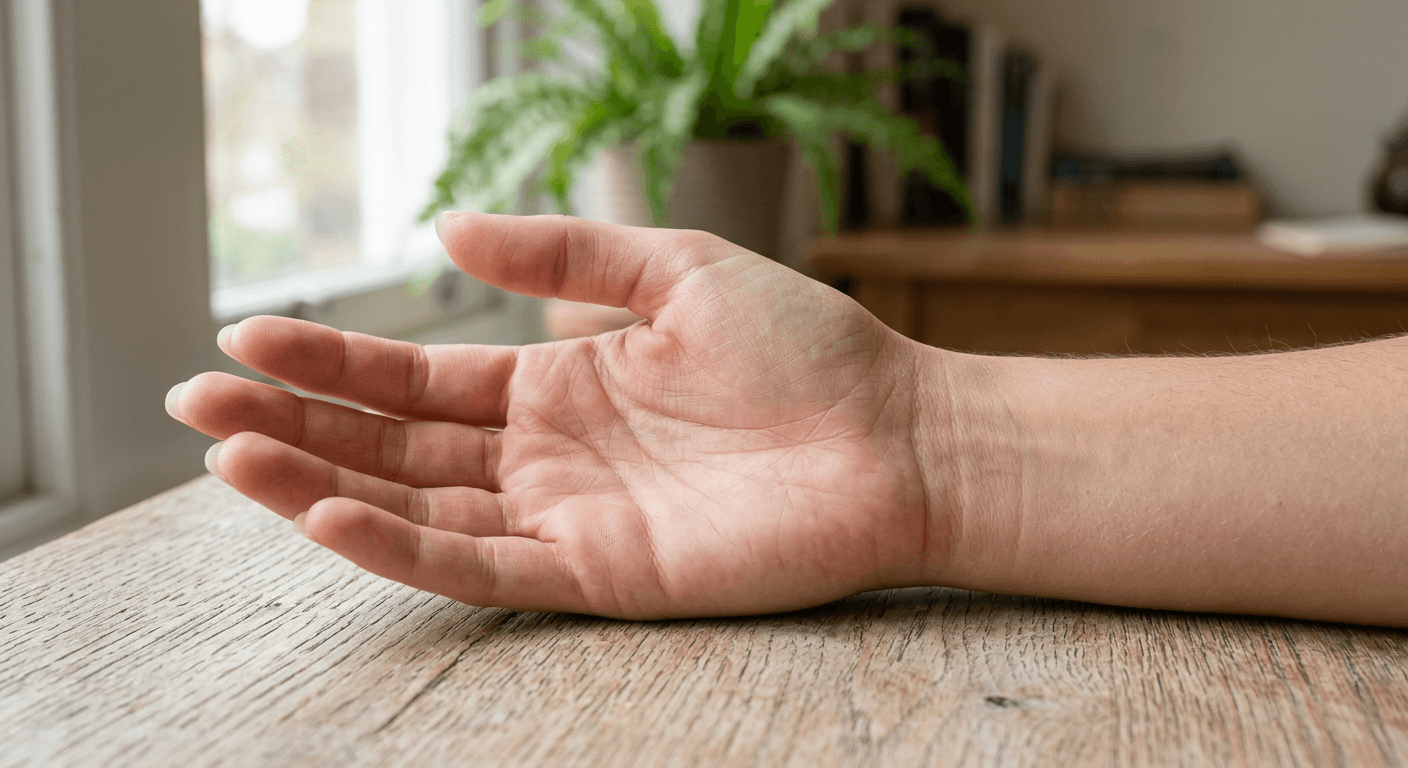
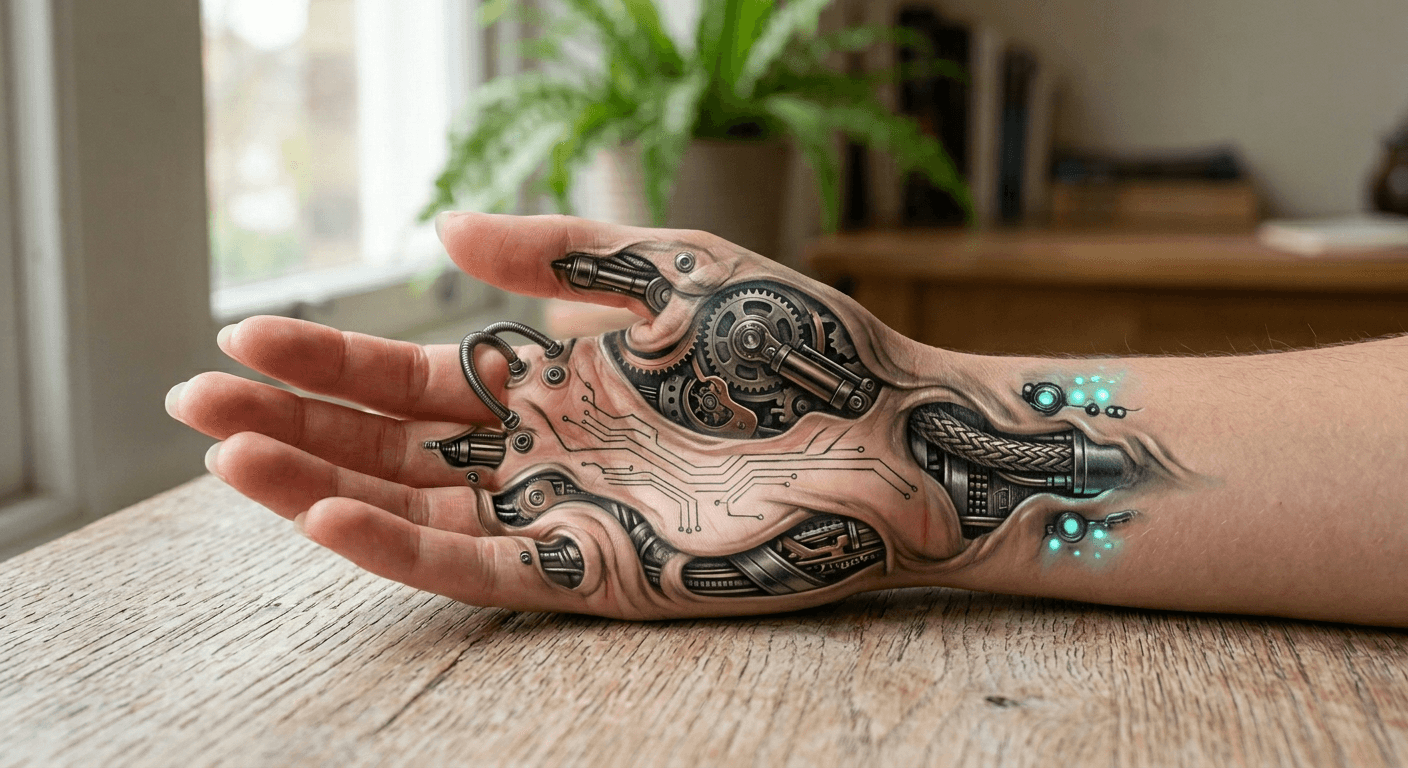
Why the Hand is the Ultimate Canvas for Biomechanical Tattoos
The hand is arguably one of the most expressive and mechanically complex parts of the human body. Featuring 27 bones, intricate networks of tendons, and highly articulated joints, it inherently mirrors the structure of advanced robotics. This structural parallel makes the hand an absolute prime location for biomechanical tattoos—a style of body art that transforms human anatomy into a stunning display of cybernetic parts, ripped flesh illusions, and mechanical engineering.
However, this complexity also makes the hand a notoriously difficult canvas for tattoo artists. The skin is thin, the surface is constantly shifting, and creating a convincing 3D illusion of depth—such as exposing a metallic piston where a metacarpal bone should be—requires absolute precision. This is exactly where the advanced AI visualization capabilities of p20v.com become an invaluable asset for both tattoo enthusiasts and professionals.
The Challenge of Hand Placement
- Curved, multi-faceted topography.
- High-movement areas warp traditional 2D stencils.
- Shadows and highlights must align perfectly with real-world lighting.
- High visibility means there is zero room for error.
The p20v.com AI Solution
- Instant, realistic 3D mapping onto your specific hand shape.
- Test hundreds of variations (gears, wires, carbon fiber) in seconds.
- Experiment with torn-skin illusions without commitment.
- Provide your tattoo artist with a hyper-accurate reference image.
Decoding the Biomechanical Aesthetic: What to Generate
When utilizing the AI generation tools on p20v.com, the prompts you craft dictate the realism and style of your biomechanical piece. To create an illusion that stops people in their tracks, you must understand the core elements of the genre. Biomechanical art, heavily popularized by legends like H.R. Giger, blends organic shapes with industrial mechanics.
Trompe l'œil and Ripped Flesh
The foundation of a great biomech tattoo is the illusion of depth. The design should look as though your outer layer of skin has been torn, unzipped, or worn away to reveal the machinery operating beneath. When prompting the AI, use phrases like "hyper-realistic torn skin edges," "3D depth illusion," and "sub-dermal mechanical revealing."
Gears, Pistons, and Struts
Anatomical alignment is crucial. A piston should replace a bone or tendon, moving in the exact direction the organic part would. Visualize hydraulic struts operating the fingers, and overlapping gears resting within the palm or back of the hand. Keywords such as "anatomically accurate chrome pistons" or "interlocking brass gears replacing knuckles" yield phenomenal results.
Wiring and Circuitry (Cyberpunk Influence)
Modern biomechanical tattoos often blur into the cyberpunk genre. Instead of purely industrial greys and metallic tones, adding vibrant, glowing elements creates a striking contrast against human skin. Incorporate prompts like "glowing neon fiber optic wires mimicking veins," "carbon fiber plating," and "embedded microchips with LED accents."
Frequently Asked Questions
How accurate is the AI in mapping the tattoo to my hand?
The underlying architecture powering p20v.com is highly advanced, trained specifically on complex human anatomy and surface topography. It understands the organic curves, shadows, and joint placements of the hand, ensuring the generated biomechanical tattoo wraps naturally and looks convincingly 3D.
Can I show these AI generated designs to my tattoo artist?
Absolutely. In fact, professional tattoo artists prefer clients who come in with clear visual references. Because biomechanical tattoos rely heavily on precise placement and depth, showing your artist an exact AI-generated mock-up on a real hand gives them a massive head start in designing the actual stencil and determining the light sources required for the 3D illusion.
What are the best colors to use in a biomech hand tattoo?
Traditional biomechanical art heavily utilizes black and grey to mimic steel, iron, and shadows, mixed with subtle organic reds and pinks to simulate raw flesh. However, modern cybernetic variations often incorporate bright neon highlights—such as electric blue, acid green, or glowing red—to represent energy sources, coolants, or fiber optics. You can experiment with all these color palettes effortlessly on p20v.com before deciding.